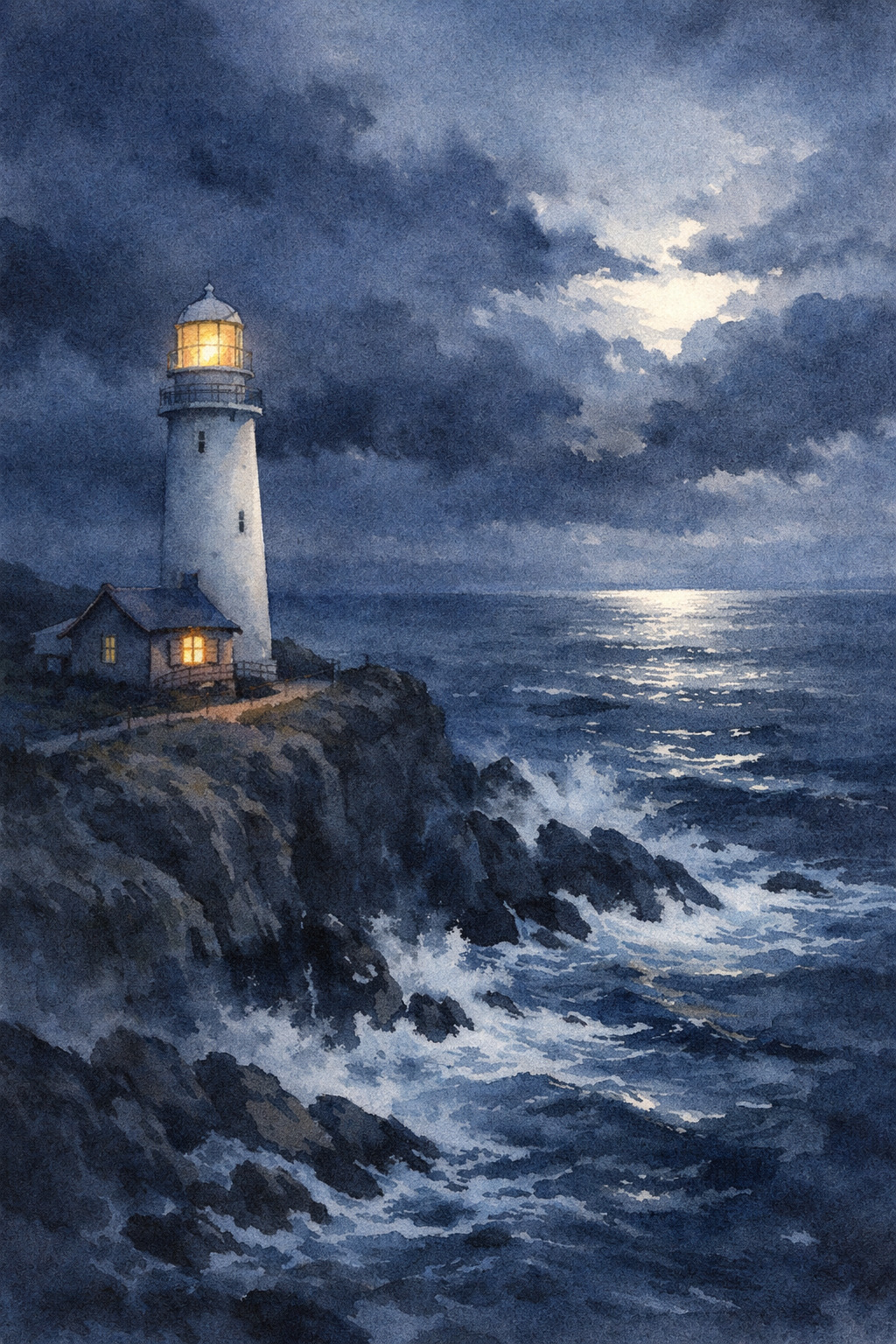
The lighthouse stood on the westernmost point of the headland, a white tower of rendered stone built in eighteen sixty-three and painted every few years since, the paint always the same white, always the same sequence of preparation and undercoat and top coat, the work done in the summer when the weather permitted and the scaffolding could be erected without the wind taking it. From the sea the lighthouse appeared small against the headland, the headland being very large, a mass of dark dolerite that dropped on its western face directly into the Southern Ocean in cliffs of between forty and one hundred metres, depending on where along the face you measured. From the land the lighthouse appeared to be at the edge of the world, which in certain weathers it effectively was, the visibility zero and the sound of the sea so large and close that the land itself seemed to be moving.
Owen Callahan had been keeping the light at Cape Farewell for three years. He had come to it after a working life that had included a decade of fishing out of Strahan and five years of marine research work with the university at Hobart, work that had kept him on the Southern Ocean for much of the year, and he had applied for the lighthouse keeper position when it was advertised without any very clear reason beyond the feeling that it was what he wanted to do next, a feeling he had learned over the years of the fishing and the research to trust more than he had initially. The interview had been brief and the appointment had come within a week and he had been at Cape Farewell, which was five hours by road from Hobart and then an hour in a small boat from the nearest landing, within a month of the appointment.
He was the only keeper, the light having been automated in the nineteen eighties but the role of the resident keeper retained by the authority for reasons of safety monitoring and equipment maintenance. In other countries and on other coasts the lights had been unmanned entirely, the automation trusted to run without supervision, but on this coast and particularly at this lighthouse the authority had maintained the view that a resident keeper was necessary, partly because the equipment was older than was ideal and prone to failures that required immediate human attention, and partly because the headland itself was in a position and a weather regime that made the consequences of a light failure potentially serious, the shipping lanes not heavily used but not empty, and the coast of Tasmania being the coast it was.