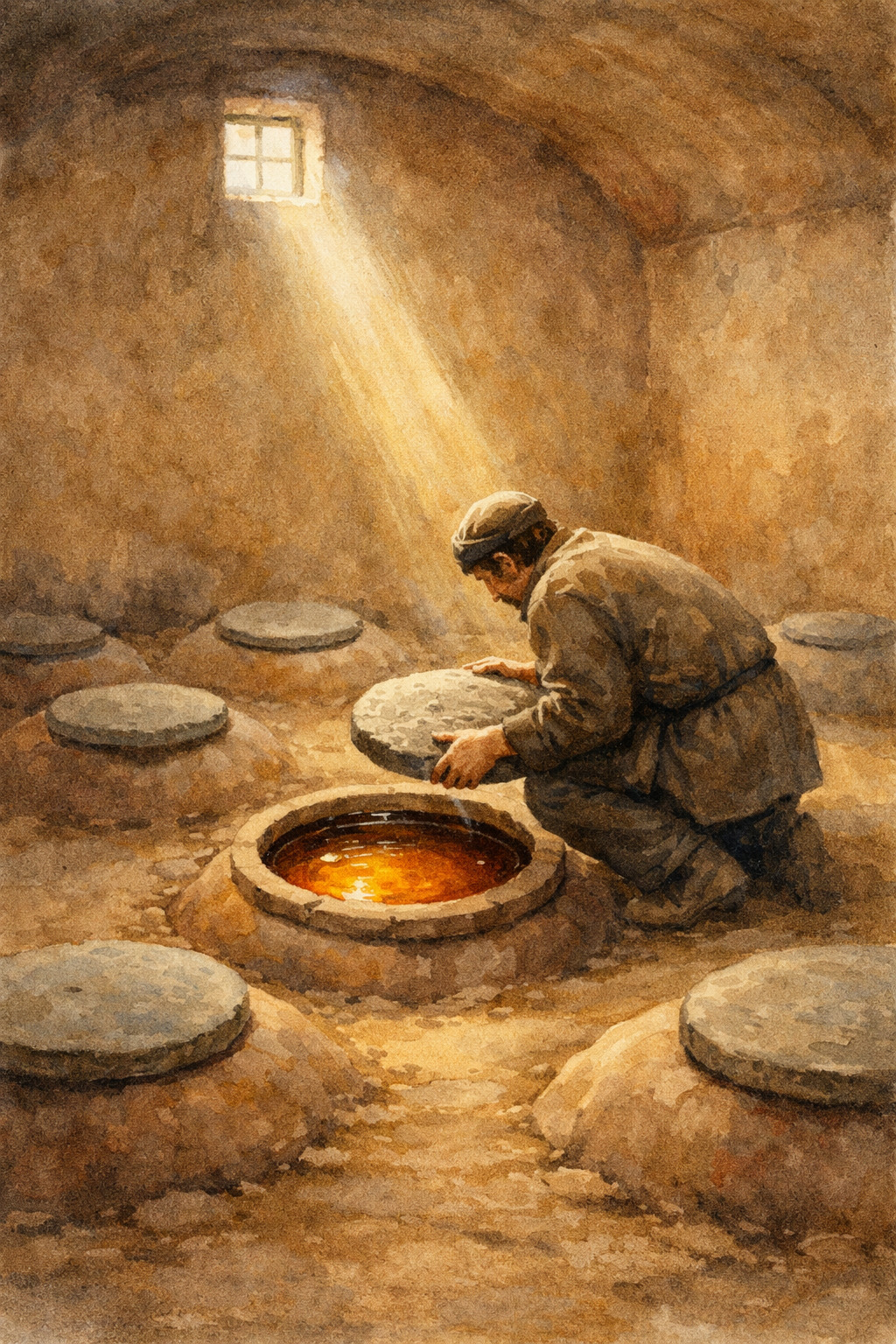
Revaz came down to the marani before the morning light had reached the valley floor.
The air outside the house was cold and still, the cold of a Kakhetian October night that had cleared fully and allowed the heat to radiate out into the sky, the temperature dropping to four or five degrees by the early hours and holding there until the sun came up and began the slow warming of the mid-morning. He had been awake since five, the pre-dawn habit of the harvest season and the weeks that followed it: the body clock adjusted to the early rising by weeks of necessity, the adjustment persisting past the point where the necessity remained. He had put on his coat in the dark of the house and come out into the yard, the sky still dark overhead with the stars of a cloudless night, the Milky Way a pale band above the ridge to the north.
The walk from the house to the marani door was thirty metres. In October he did it by the light from the house windows for the first few metres and then by the ambient starlight and by the familiarity of the ground, the path worn to a slightly different surface from the surrounding yard by generations of this daily walk and known underfoot without needing to be seen. He had made this walk in snow in January and in the summer heat of August and in every season of the calendar year, and in darkness and in full daylight, and the walk itself was so ingrained in the body's memory that it required no conscious navigation.