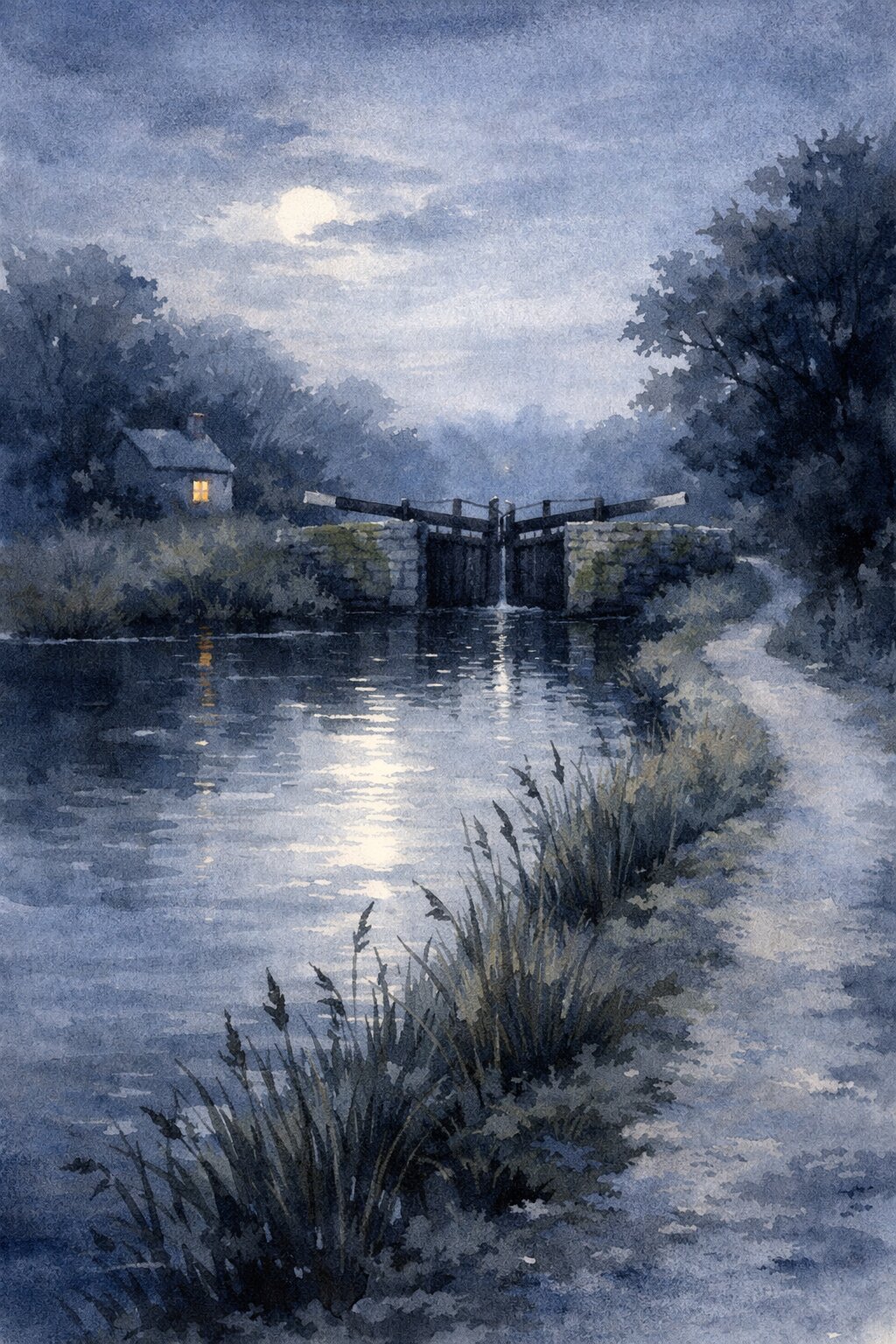
The canal had been built in the seventeen-nineties, which meant it was now a little over two hundred years old, and in that time it had carried coal and clay and salt and grain and timber and a great many other things from one part of the country to another, and then the railways had come and it had carried less, and then less still, and eventually it had carried nothing commercial at all, and for a time it had been simply left, the locks falling into disrepair, the towpath overgrown, the water going green and still and thick with weed. Then a trust had been formed and the canal had been restored over many decades, the locks repaired one by one, the towpath cleared, the water managed, and now it was used by narrowboats in the summer months, moving slowly up and down its length, and by walkers along the towpath in all seasons, and by the particular kinds of wildlife that had moved into it during the decades of its abandonment and never entirely left.
Thomas Ely had been inspecting the canal for eleven years. His job was to walk its full length, all forty-three miles of it, in sections over the course of each month, checking the condition of the locks and the overflow weirs and the towpath surface and the mooring rings and the various other features of the canal's infrastructure, noting what needed attention, recording what he found in the forms provided for that purpose, and reporting to the trust's maintenance team. He had done this every month for eleven years, which meant he had walked the full length of the canal more than one hundred times, and he knew it in the way that you can only know something that you have approached repeatedly from the same direction, in all weathers and all seasons, at all times of day, over a great many years.
He began his October inspection on a Tuesday morning in the second week of the month. He drove to the southern terminus of the canal, a basin at the edge of a small town, and parked in the car park beside the old wharf building, which was now a visitor centre with an exhibition about the canal's history and a small café that was open at weekends in the summer but closed now, the chairs stacked inside against the window. He put on his boots and his waterproof jacket and took his clipboard and his camera and his measuring tape and his notebook from the back seat, and he walked down the path to the canal.